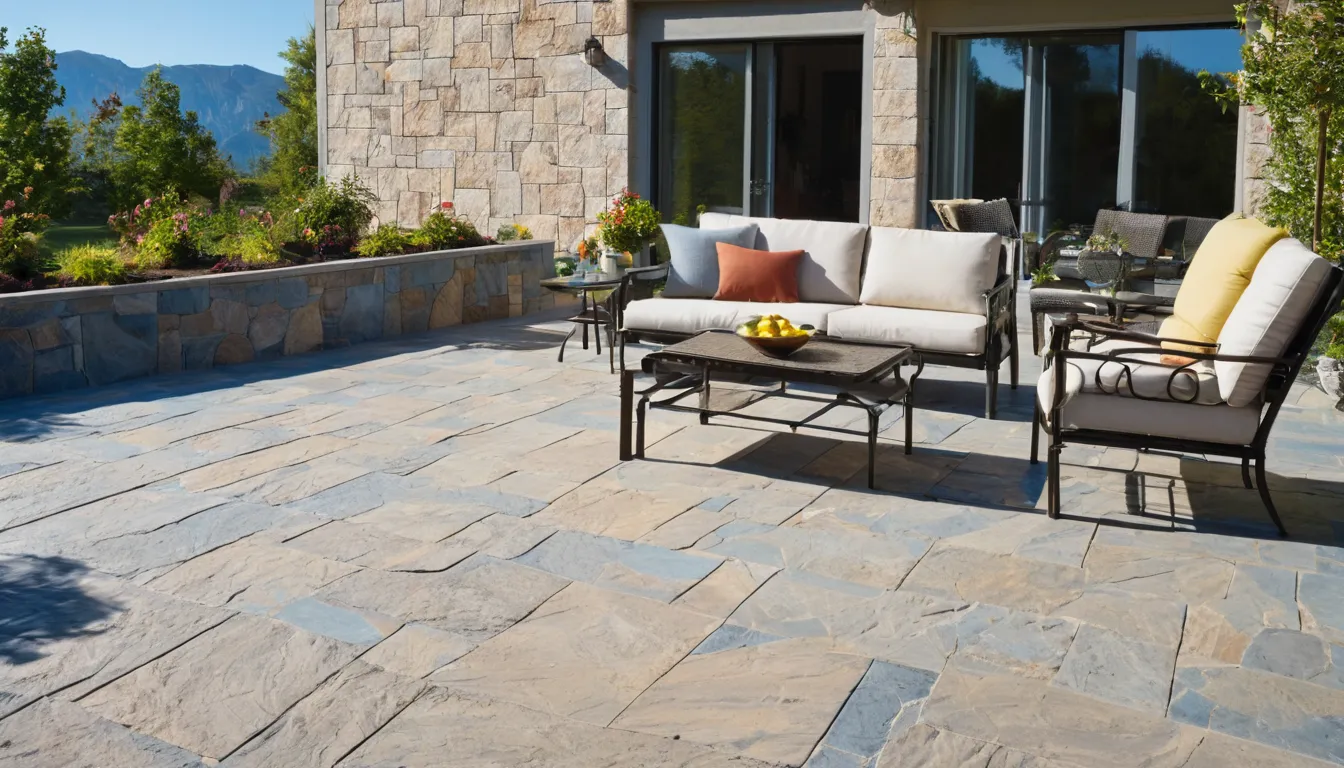
Need concrete patios in Eagle Mountain?
Tell us about your driveway or patio plans. Send the request form, or Request a callback to check provider availability.
No obligationConcrete driveways and patios for Eagle Mountain homes
Request your patio estimate
A new concrete patio gives you a flat, tough spot for chairs, a grill and weekend meals. It also takes planning. The slab has to handle sun, snow, hail and fast spring melt without cracking or pooling water.
Loanwhich Concrete is a referral service. We do not pour concrete. We connect homeowners in the Eagle Mountain area with independent providers in our network. You can measure, snap photos and jot down notes first. Then a local provider can walk the site, talk through finishes, base depth and drainage, and give you a written quote. Use this guide to learn the basics, spot the right questions and feel ready. No obligation.
Start with timing. Concrete needs mild temperatures to cure well. In a place with heavy snow and strong sun, good pouring windows can be short. Providers book up, so ask early.
Do not pour in a rush. A rushed slab is the one you end up patching.
Concrete is sturdy. It handles heavy grills, planters and furniture. It does not rot like wood or shift like loose pavers.
It also takes many looks. You can keep it plain, add color or press a pattern into it. That makes it a good fit for newer frame homes with wood or stucco walls.
Before anyone mixes a batch, learn the basic choices. Shape, size, thickness, finish and color all change the price and the result.
Write down what you like. Then compare notes with what a provider suggests.
The job is more than pouring. Here is the usual flow:
Before digging, buried lines must be located. Many areas have a public locate process, so ask the provider how it works in your area. Never dig deep on your own near a line.
This is a great job for you. Grab a tape, stakes and string.
Mark the corners with stakes. Run string between them. Measure length and width, then snap photos from three angles.
Set your outdoor furniture inside the lines. Walk around it. If you can't pull a chair out without bumping a table, go bigger.
A typical patio slab is about four inches thick. Spots that hold a hot tub, a heavy grill island or a vehicle may need more. A provider can advise.
The surface is where you feel the choice. Pick for grip, looks and upkeep.
If you like pattern, ask providers about stamped concrete patios. Each finish has its own upkeep, so ask what yours needs.
This is the part that gets skipped, and it matters most. Water must run away from the house. A patio that slopes toward a wall can send water toward a basement.
Stand outside during rain. Watch where water flows. Take a short video.
Providers often set a slight slope away from the home. You will barely see it. Your foundation will notice.
If you already see cracks in a wall, sticking doors or wet basement spots, tell the provider. Foundation repair experts can look at those issues separately. A patio should not be poured over a problem that is still moving.
Intense sun dries concrete quickly, which can cause surface cracks if curing is not managed. Freeze and thaw cycles stress slabs too. Ask about air-entrained mixes, joint spacing and sealing. Hail and heavy snow loads also favor a dense, well-built slab.
You are hiring for the heavy work. Ask clear questions.
Get more than one quote if you can. Compare the same scope side by side. Providers in our network are independent, so each sets its own terms.
Keep a simple folder. Include your measurements, sketches, photos of the site and any quotes. Save the final invoice too.
If damage from weather ever affects the patio, some policies may cover sudden damage, so check your policy. Providers can often help document damage for a claim. Good records make that talk easier.
Give it time. Keep traffic and heavy items off until the provider says it is ready.
When a small crack shows up, snap a photo and note the date. Watch it over time. For anything that widens, a provider can take a look.
Marking the outline, clearing sod, digging to depth and packing a gravel base for a steady slab.
Wood forms set the shape. Reinforcement goes in, then concrete is poured, leveled and finished.
Cut joints guide cracking. The surface gets a broom, trowel, stamped or exposed look.
The slab cures with care, then gets sealed to resist moisture and wear.
Prices vary by size, finish, access and local rates. These are typical U.S. ranges only. Ask each provider for a written quote that lists what is included.
| Item | Typical range | Notes |
|---|---|---|
| Basic broom-finish patio (per sq ft) | $6 – $12 | Plain gray slab, simple shape |
| Colored or exposed aggregate (per sq ft) | $9 – $18 | Added materials and labor |
| Stamped concrete patio (per sq ft) | $12 – $25 | Pattern and color add time |
| Site prep and excavation | $500 – $2,500 | Depends on slope and access |
| Gravel base and forms | $300 – $1,500 | Scales with patio size |
| Sealing | $1 – $3 per sq ft | Often repeated over the years |
Stake the corners, measure the space and snap photos. Add notes on where water flows after rain.
Choose a finish, color and shape you like. Bring examples to compare.
Tell us about the project. A local provider in our network can follow up.
Review written quotes side by side, ask questions, then choose the provider that fits.
Learn the terms and options first so estimates make sense and surprises stay small.
Providers in our network run their own jobs, set their own quotes and do the work.
Photos, measurements and notes help providers quote clearly and help with any claim talk.
Request an estimate, compare your choices and decide when you are ready. No obligation.
Tell us about your driveway or patio plans. Send the request form, or Request a callback to check provider availability.
No obligationMost patios are about four inches thick over a packed gravel base. Areas with heavy loads, like a hot tub or grill island, may need more. A local provider can recommend the right depth.
Foot traffic is often fine after a few days, but heavy furniture and grills usually need longer. Ask your provider for a clear timeline, since weather changes curing.
It can if water slopes toward the house. A well-planned patio drains away from the walls. Mention any cracks or damp basement spots to the provider before work starts.
Tell us about your driveway or patio plans. Send the request form, or Request a callback to check provider availability.
No obligation